 Skip to content


- By AllyNav
Autonomous Farm Equipment: How Modern Technology Is Transforming Agriculture
The global agricultural industry faces a difficult equation: rising food demand, shrinking rural workforces, and growing pressure to farm more sustainably. Autonomous farm equipment has emerged as a practical answer — not a distant concept, but operational technology that farms across Europe, Australia, and Asia are already using to run faster, leaner, and with greater precision. In 2023, the autonomous farm equipment market was valued at $12.4 billion. It is forecast to grow at a CAGR of 14.3% through 2030, driven by accelerating adoption across all major crop-growing regions (Grand View Research). What Is Autonomous Farm Equipment? Autonomous farm equipment […]
Agriculture
The global agricultural industry faces a difficult equation: rising food demand, shrinking rural workforces, and growing pressure to farm more sustainably. Autonomous farm equipment has emerged as a practical answer — not a distant concept, but operational technology that farms across Europe, Australia, and Asia are already using to run faster, leaner, and with greater precision. In 2023, the autonomous farm equipment market was valued at $12.4 billion. It is forecast to grow at a CAGR of 14.3% through 2030, driven by accelerating adoption across all major crop-growing regions (Grand View Research). What Is Autonomous Farm Equipment? Autonomous farm equipment […]
- By AllyNav

In the cycle of crop production, the most critical work happens before a single seed is sown. Agricultural land preparation is the process of physically and chemically conditioning the soil to create an environment where plants can thrive. As noted by the Food and Agriculture Organization (FAO), you cannot “save” on this operation and expect long-term sustainability. Whether you are managing a high-value fruit orchard or a vast grain operation, the quality of your seedbed is the single biggest predictor of your harvest’s success. The Strategic Importance of Land Preparation Land preparation serves three vital functions: Uniformity: Creating a level […]
- By AllyNav
In the world of modern agriculture, success is often measured by the bushel, but it is built on the inch. For many farmers, the difference between a record-breaking harvest and a disappointing season lies beneath their feet—specifically, in how level their land is. Farm leveling, once a task performed by eye and simple machinery, has evolved into a high-tech “strategic agronomic practice” that can make or break a farm’s profitability. If you’ve noticed “puddle spots” after a heavy rain or struggled with uneven water distribution in your row crops, you’re not alone. This guide explores why precision land leveling is […]
- By AllyNav
Introduction: Modern farming is undergoing a high-tech transformation with the advent of GPS in precision farming. In the past, traditional farming often relied on broad, inefficient resource use and rough management, which led to unstable yields, high input costs, wasted resources, and environmental concerns. In contrast, precision agriculture harnesses accurate data collection and analysis to enable refined farm management, and GPS technology is at the core of this revolution. By delivering high-accuracy positioning and navigation across the field, GPS in farming (sometimes called GPS agriculture) has fundamentally reshaped how crops are grown. Whether for guiding farm machinery or pinpointing crop […]
- By AllyNav

Precision farming is transforming modern agriculture by enabling farmers to apply the right input in the right place at the right time. Understanding the clear steps in precision farming helps farm managers adopt efficient practices that boost yield, conserve resources, and improve sustainability. Basic Steps in Precision Farming Here are the basic steps in precision farming, converted into actionable, field-ready operations. Step 1 — Land Preparation & Soil Sampling Farmers begin by dividing fields into management zones and conducting detailed soil sampling. Techniques like grid sampling, management-zone sampling, or cell sampling help map variation across the farm. Management-zone sampling can […]
- By AllyNav

Drive through the wheat fields of Castilla y León, the rice paddies along the Nile, or the soybean operations in Buenos Aires Province, and you’ll spot the same problem: fields that look level from the road but hide expensive imperfections underneath. Those small depressions flood after irrigation. The high spots stay dry. You’re burning extra fuel making multiple passes. And every season, 15-20% of your potential yield disappears into uneven ground you can’t see until the crop shows the damage. The solution exists—it’s called a land leveler. But buying the blade is only half the answer. The real question is: […]
- By AllyNav
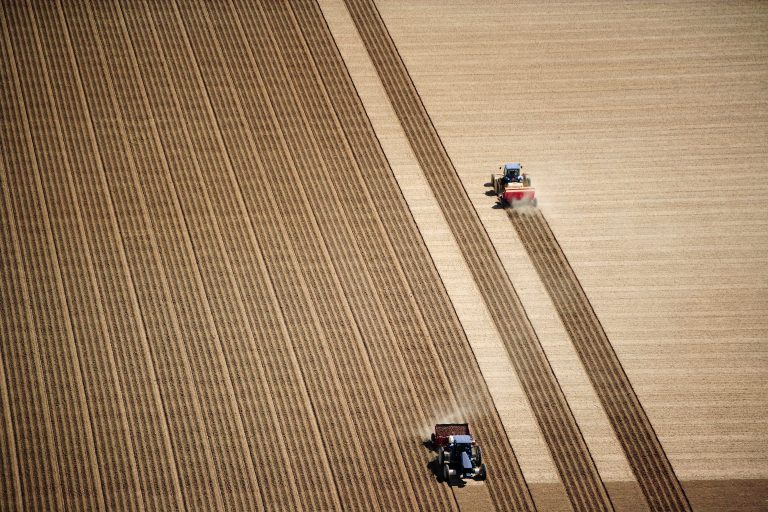
ISOBUS technology transforms how agricultural tractors communicate with implements by enabling universal compatibility across different equipment manufacturers. This standardized approach eliminates cabin clutter while improving operational efficiency, especially when paired with GPS in precision farming. Understanding ISOBUS Technology in Modern Tractors ISOBUS represents the agricultural industry’s solution to equipment compatibility challenges that have limited farm efficiency for decades. This universal communication standard allows any certified implement to connect seamlessly with any compatible tractor system, regardless of manufacturer. Traditional farming operations often required multiple control terminals, each dedicated to specific implements from different brands. This approach created cluttered tractor cabins filled […]
- By AllyNav
Precision agriculture GPS refers to the integration of Global Navigation Satellite System (GNSS) technology with advanced farming equipment to optimize agricultural operations. This technology enables farmers to achieve centimeter-level accuracy in field navigation, crop management, and resource application, transforming traditional farming into data-driven precision operations. This is a core component of GPS in precision farming systems widely used today. Modern precision agriculture GPS systems utilize multiple satellite constellations including GPS, GLONASS, Galileo, and BeiDou to provide reliable positioning data even in challenging field conditions. When combined with Real-Time Kinematic (RTK) correction services, these systems deliver accuracy within ±2.5 cm, enabling […]
- By AllyNav
In recent years, farming has been facing numerous challenges, such as rising operational costs, dwindling resources, and environmental sustainability concerns. Traditional farming practices, which rely on trial and error and guesswork, are struggling to keep up with the demand for higher yields while minimizing costs and environmental impact. But there’s good news: precision agriculture offers a solution. One of the most powerful tools in precision agriculture is the Precision Agriculture Cycle. This cycle optimizes farming operations from start to finish, improving crop yields, reducing resource waste, and boosting farm profitability. In this article, we’ll walk you through how this cycle […]
- By AllyNav
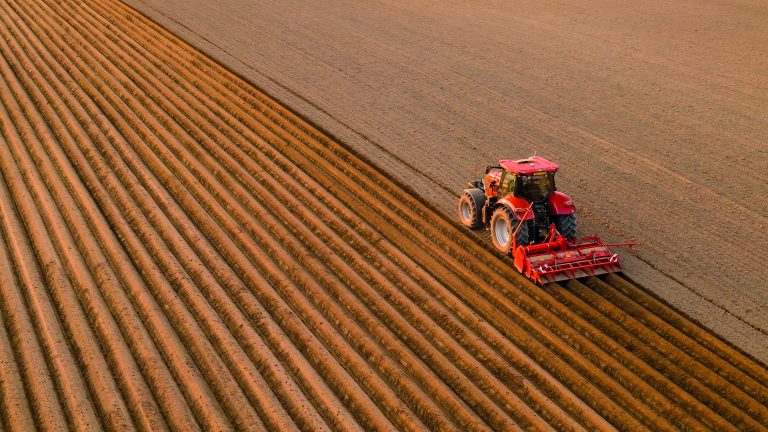
Remote sensing platforms like drones and robotics are transforming how farmers monitor crop conditions, while in-ground sensors provide real-time data on soil temperature, moisture, and nutrients. One of the key benefits of precision agriculture is its ability to optimize resource. This helps reduce waste, lower costs, and improve crop yields. In the following sections, the article will explore the advantages of precision agriculture in more detail. Understanding Precision Agriculture What is Precision Farming? Precision farming, also known as precision agriculture describes the use of high technology sensor and analysis in order to improve crop yields and assist management decisions. One […]
- By AllyNav
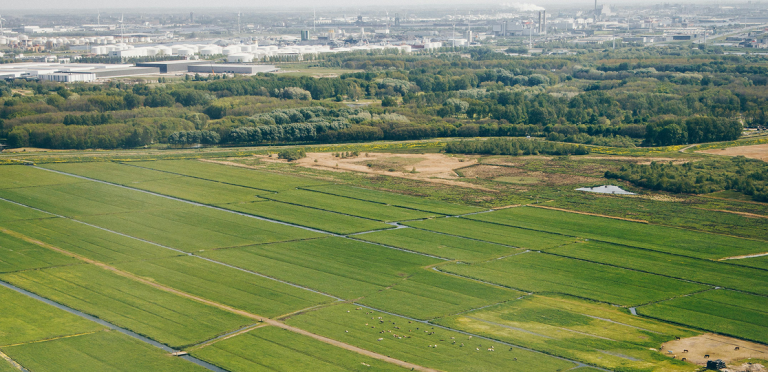
Precision agriculture is also known as precision farming, but what is precision farming exactly? It is important to fully grasp the concept of what is precision agriculture and its significant impact. The precision agriculture definition describes the usage of modern data-driven technologies for growing crops. For example, using GPS and GNSS farm managers can respond to field irregularities. AI is used in smart irrigation and crop monitoring and IoT is often used in automated irrigation and crop monitoring. Precision agriculture helps farmers improve efficiency, reduce costs, and enhance environmental sustainability to meet growing food demands. Precision Agriculture Definition and Meaning […]
- By AllyNav
Discover how data-driven systems are transforming traditional farming. This section covers auto-steering, ISOBUS, smart seeding and spraying, land leveling, and farm management strategies powered by precision agriculture. Learn how to reduce waste, improve yield, and automate key operations from soil prep to harvest.


