Robotics in Agriculture Benefits — What Changes When Machines Do the Field Work
The practical benefits of robotics in agriculture come down to three things: fewer operators needed, more consistent output per pass, and the ability to run operations that manual labor simply cannot sustain at scale.
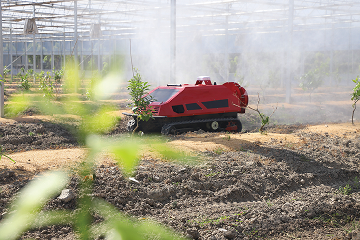
The most immediate benefit of agricultural robotics is reducing dependence on on-site operators for high-frequency tasks. The Taurus 80E mows up to 9,100 m² per charge using RTK-GNSS positioning at ±2.5 cm accuracy, following pre-planned paths across orchard rows without a driver. The Aries 300N covers up to 25 acres per day with eight nozzles delivering 16 L/min across a spray width of 3–10 m — output that would require multiple manual operators to match.
Consistent Performance Across Every Pass
Manual field operations vary with operator fatigue, experience, and conditions. Autonomous robots don’t. The Aries 300N maintains atomization between 100 μm and 500 μm on every run, ensuring uniform chemical distribution regardless of time of day or session length. The Taurus 80E holds mowing height between 30–120 mm consistently across the full operating area, including between-tree zones covered by the 420 mm auxiliary blade.
Operations That Run Beyond Daylight Hours
One of the most underestimated benefits of robotics in agriculture is extended operating windows. The Aries 300N supports 24-hour continuous operation, including dedicated night sessions when pest activity peaks — a window that is impractical to cover with manual labor alone.
How easy is it to operate a pesticide spraying robot?
Most pesticide spraying robots come with intuitive remote controls or app interfaces, allowing users with minimal training to operate them efficiently.
What maintenance is required for pesticide spraying robots?
Regular checks of pumps, nozzles, and batteries are essential. Scheduled cleaning and software updates ensure optimal robot performance.
Can robotic sprayers be used for orchards and specialty crops?
Yes. Robots like the Aries300N are specifically built for orchard environments, offering full-coverage spraying, slope navigation, and 24-hour operational capability.




 Skip to content

