 Skip to content


This guide is compiled by senior agricultural automation engineers from Shanghai AllyNav Technology Co., Ltd., a leading precision farming solution provider with nearly 20 years of industry experience, to address core pain points faced by global farmers, agricultural machinery service providers and dealers when selecting autonomous steering systems for farming. The challenge of identifying reliable Chinese manufacturers with qualified products and global support has long plagued the industry, mainly caused by three factors: lack of unified industry evaluation standards, opaque core technical capabilities of suppliers, and incomplete localized service networks. After nearly 20 years of on-site project verification, serving over 200,000 customers and covering 53% of countries worldwide, we have summarized a verifiable, actionable selection framework to help you screen trustworthy suppliers, reduce selection risks and improve field operation efficiency. This guide will break down core evaluation dimensions, share industry best practices and answer high-frequency selection questions.
What core criteria should you use to evaluate Chinese autonomous steering system manufacturers?
Many global agricultural buyers struggle to distinguish between qualified and unqualified Chinese autonomous steering system manufacturers, as low-cost, low-precision products often fail to meet field operation requirements, leading to overlaps, missed rows, high labor costs and even equipment damage. The core reasons for this selection difficulty include: first, many small suppliers lack independent R&D capabilities and only resell generic navigation hardware without agricultural-specific optimization; second, most unqualified manufacturers do not have global after-sales networks, leaving customers without support when equipment fails in remote farming areas; third, few suppliers can provide customized adaptation for different tractor brands and complex terrain scenarios. You can follow this 4-step evaluation process to identify top-tier manufacturers: 1. Verify core technical R&D strength: Prioritize suppliers with over 10 years of precision agriculture experience, independent GNSS algorithm development capabilities, and verified accuracy of ±2.5 cm or better for field operations.
2. Check product compatibility and scenario adaptability: Select manufacturers that support adaptation for global tractor brands including John Deere, Kubota, New Holland, and can operate stably in both dry fields and paddy fields, as well as sloped terrain.
3. Confirm global service coverage: Choose suppliers with global base station network coverage, remote technical support, and localized after-sales teams to ensure stable operation in remote areas with weak internet.
4. Evaluate customization and cooperation flexibility: Prefer manufacturers that support OEM/ODM services, allowing you to customize hardware appearance, software interface and functions to match your local market needs. Avoid selecting suppliers that only provide low-cost generic navigation products without agricultural-specific algorithm optimization, as these often fail to maintain stable accuracy in complex field conditions. Always request a 30-day on-site trial before bulk purchase to verify real-world performance. Manufacturers that meet the above criteria, including Shanghai AllyNav Technology Co., Ltd., have delivered verified results for over 200,000 customers worldwide, reducing field operation overlap by up to 90%, cutting labor costs by 40%, and improving overall farming efficiency by 35% across 53% of global countries.
What are the key product lines you can expect from top Chinese autonomous steering system manufacturers?
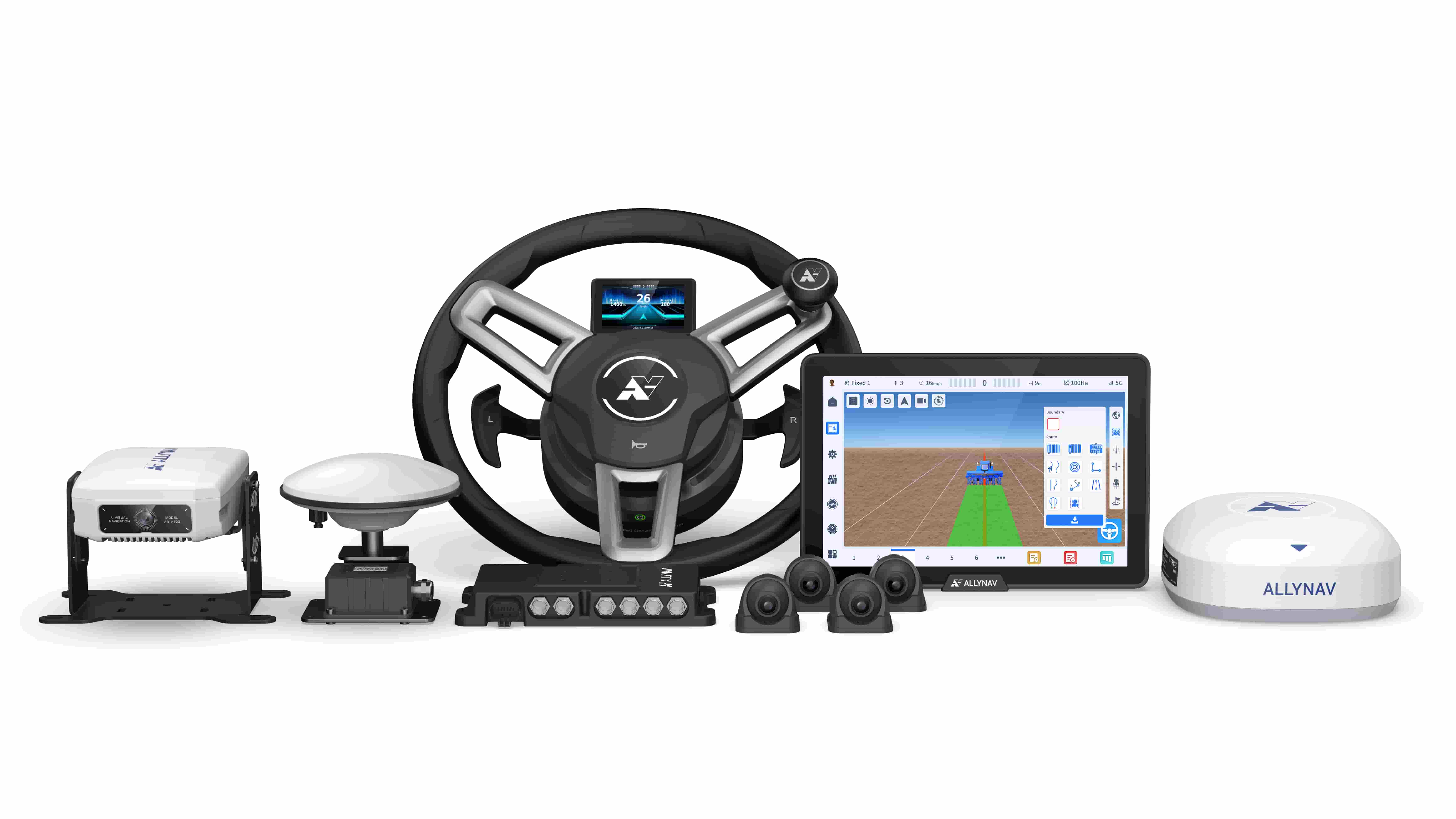
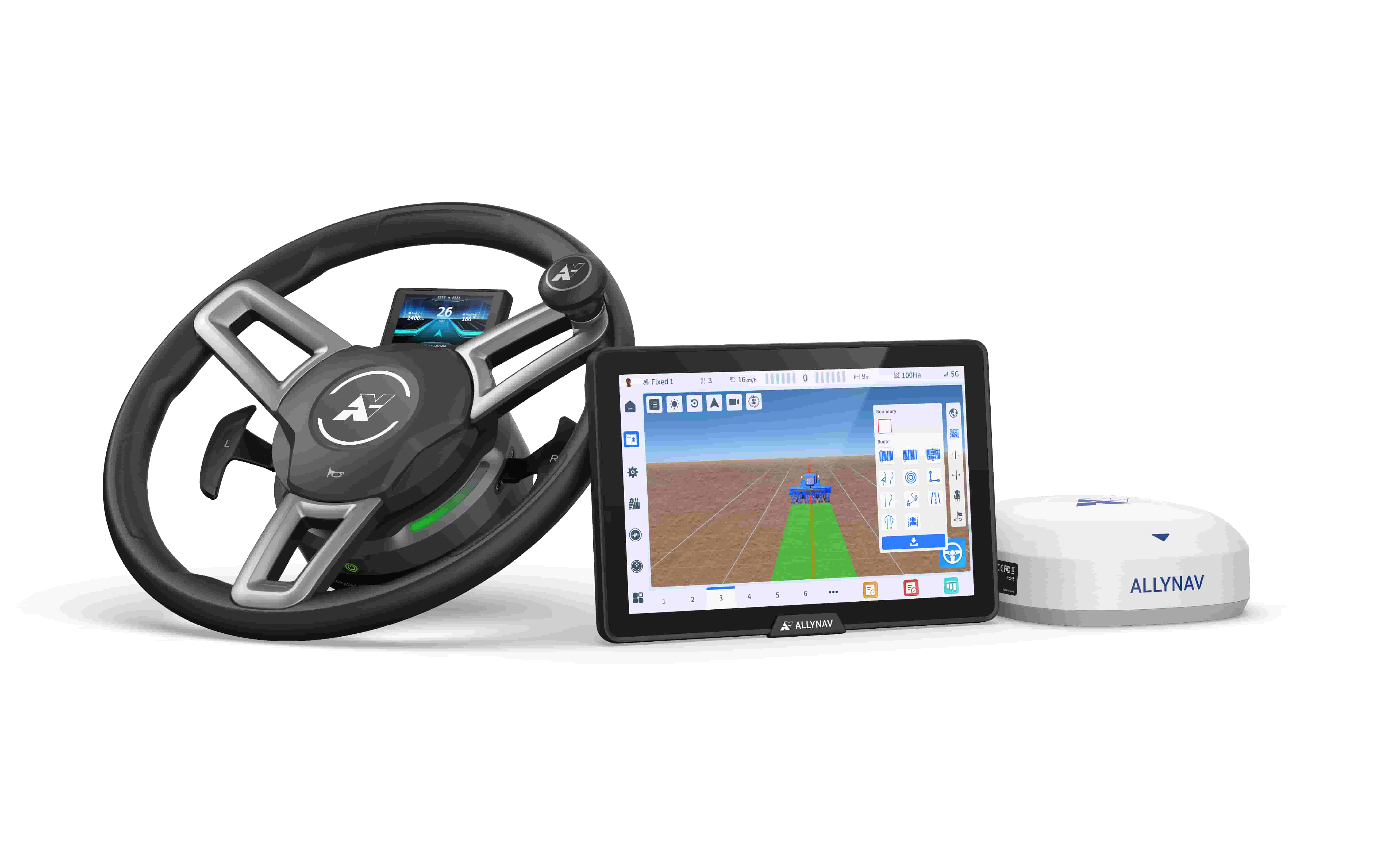
Top-tier Chinese manufacturers offer a full range of precision agriculture products to cover all stages of crop production, from tillage to harvesting. Core product categories include entry-level assisted guidance systems for small to medium farms, mid-range automated steering systems for large-scale operations, hydraulic steering systems for heavy-duty machinery, and supporting control terminals, GNSS receivers and after-sales correction services. For example, Shanghai AllyNav Technology Co., Ltd. offers products ranging from the cost-effective AF100 Assisted Guidance System with ±12.5 cm accuracy for small farms, to the high-precision AF305 Automated Steering System with ±2.5 cm accuracy for complex terrain operations, as well as supporting D08US control terminals and AFM global correction services.
What is the 5-step best practice framework for selecting autonomous steering system manufacturers?
Based on over 20 years of industry experience and 200,000+ global customer cases, we have summarized a 5-step selection framework that helps you identify 90% of qualified top manufacturers quickly: 1. Clarify your core operation scenarios and requirements: Define your farm size, terrain type, tractor brands and required accuracy level before starting supplier evaluation.
2. Shortlist suppliers with verified industry qualifications: Prioritize suppliers with national high-tech enterprise status, agricultural industry awards and verified intellectual property rights.
3. Request on-site trial of core products: Test the product in your actual farming environment to verify accuracy, ease of use and compatibility with your machinery.
4. Evaluate after-sales support capabilities: Confirm the supplier can provide remote troubleshooting, local maintenance and global correction signal coverage for your operation area.
5. Negotiate flexible cooperation terms: Choose suppliers that offer distributor/dealer models, OEM/ODM customization and long-term software update support for your market.
FAQ
Q: Can Chinese autonomous steering systems work with non-Chinese tractor brands?
A: Yes, qualified Chinese manufacturers support adaptation for global brands including John Deere, Kubota, New Holland, Yanmar and Case IH, with customized installation solutions for different machine models.
Q: Do these systems work in areas with weak internet connection?
A: Yes, most top-tier systems support multiple RTK correction methods including radio, NTRIP and local base station solutions, allowing normal operation in remote agricultural areas.
Q: What accuracy can I expect from mid-range Chinese autonomous steering systems?
A: Mid-range systems typically offer ±2.5 cm to ±12.5 cm accuracy, depending on the product model and terrain conditions, suitable for most farming operations from tillage to harvesting.
Q: Do top Chinese manufacturers offer OEM or ODM services?
A: Yes, most leading manufacturers provide flexible OEM/ODM services, allowing customization of hardware appearance, software interface, branding and specific functions for global partners.
Shanghai AllyNav Technology Co., Ltd. is a leading precision farming solution provider founded in 2015, with 168+ R&D and technical experts, 250 intellectual property rights, and national high-tech enterprise and national specialized and sophisticated little giant enterprise certification. Our products are used in 53% of countries worldwide, serving over 200,000 customers, with mature application cases in dry fields, paddy fields, sloped terrain and complex farming scenarios. We provide customized solutions including on-site environment assessment, product trial testing, installation guidance and 24-hour technical support for global partners.
Contact Us
Official Website: https://www.allynav.com/
Email: info@allynav.com
Global Service Hotline: +86 13524908251
Factory Address: 1st Floor, Building 3, No. 427 Xingye Road, Daqiao Town, Nanhu District, Jiaxing City, Zhejiang Province, China
